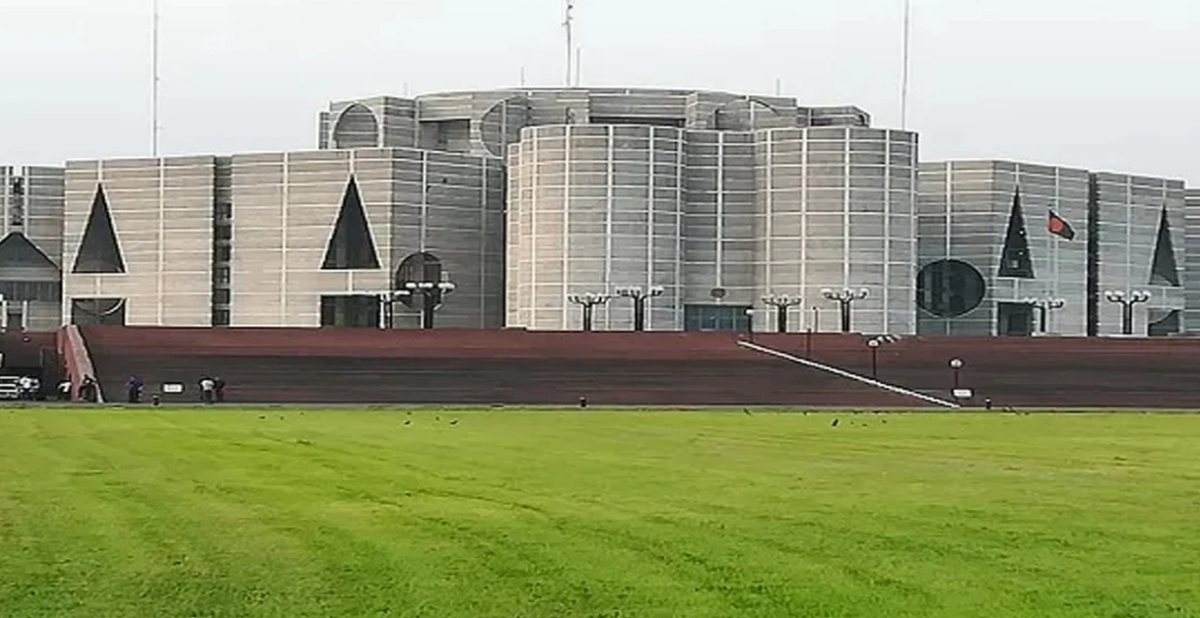
ছবি: ফাইল ছবি
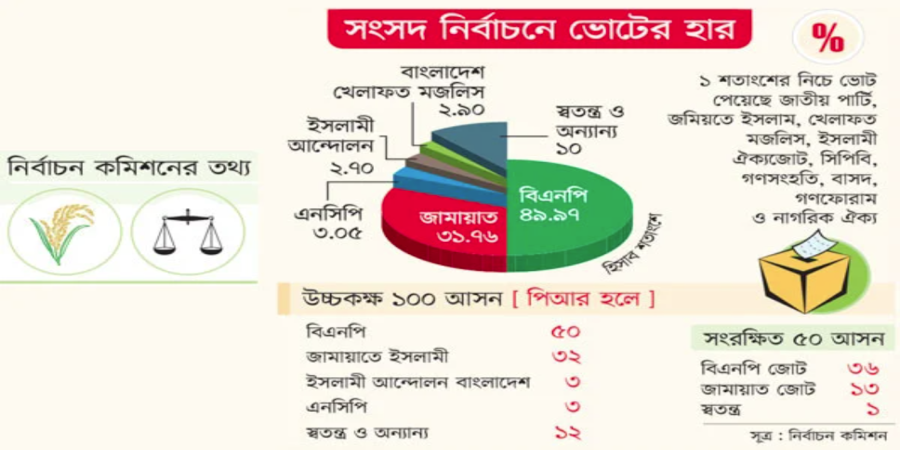
In the 13th National Parliamentary Election, the Bangladesh Nationalist Party secured nearly 37.5 million votes, accounting for 49.97 percent of the total votes cast, and is set to form the government after winning 209 seats with its Dhaner Sheesh 🌾 symbol. Meanwhile, Bangladesh Jamaat-e-Islami obtained more than 22.5 million votes, representing 31.76 percent of the total, and emerged as the second-largest force in parliament with 68 seats under the scales symbol. The Election Commission secretariat released the vote statistics three days after the parliamentary election and referendum were held. According to official figures, voter turnout in the parliamentary election stood at 59.44 percent, while participation in the referendum reached 60.26 percent. Although 50 political parties took part in the election, only seven parties managed to win seats in the 297 constituencies. Election analysts say the vote banks of both BNP and Jamaat have expanded significantly. Analyst Abdul Aleem noted that years of repression, legal cases, and political pressure during the previous government increased public sympathy for both parties, contributing to their electoral gains. He said repeated attempts to weaken the BNP failed, and the party maintained organizational strength even while its leadership operated from abroad. The uncompromising stance of party chairperson Khaleda Zia and her resistance to political pressure also created a positive perception among voters. In Jamaat’s case, the party’s past ban and the cancellation of its registration generated sympathy among a segment of the population, which is reflected in the election results. In the 1991 election, Jamaat won its highest-ever 18 seats, but this time it surpassed that record by securing 68 seats. Out of the 297 declared constituencies, BNP won 209 seats while Jamaat secured 68. Among Jamaat’s 11-party alliance partners, the National Citizens Party obtained six seats, Bangladesh Khelafat Majlis won two, and Khelafat Majlish secured one seat. On the BNP alliance side, Gono Odhikar Parishad, Bangladesh National Party-BJP, and Ganosonghoti Andolon each won one seat. Outside the alliances, Islami Andolon Bangladesh secured one seat, and independent candidates won seven seats. In the 50 reserved seats for women, the BNP alliance is expected to receive 36, the Jamaat alliance 13, and independents one seat. With the July National Charter approved through the referendum, the path has also opened for the formation of a bicameral parliament. Under the proposal, the upper house will have 100 members, and seats will be allocated based on the proportion of votes received by each political party. According to the preliminary projection, BNP may receive 50 seats in the upper house, Jamaat 32, Islami Andolon Bangladesh three, the National Citizens Party three, Bangladesh Khelafat Majlis two, and independents six seats. However, since results in two constituencies are still pending, the final numbers may change. There is also a proposal to gradually increase the number of reserved women’s seats in parliament from the current 50 to 100. Under the July Charter, the tenure of the upper house will be five years from the date of oath-taking, although it will be dissolved if the lower house is dissolved for any reason.
reporter